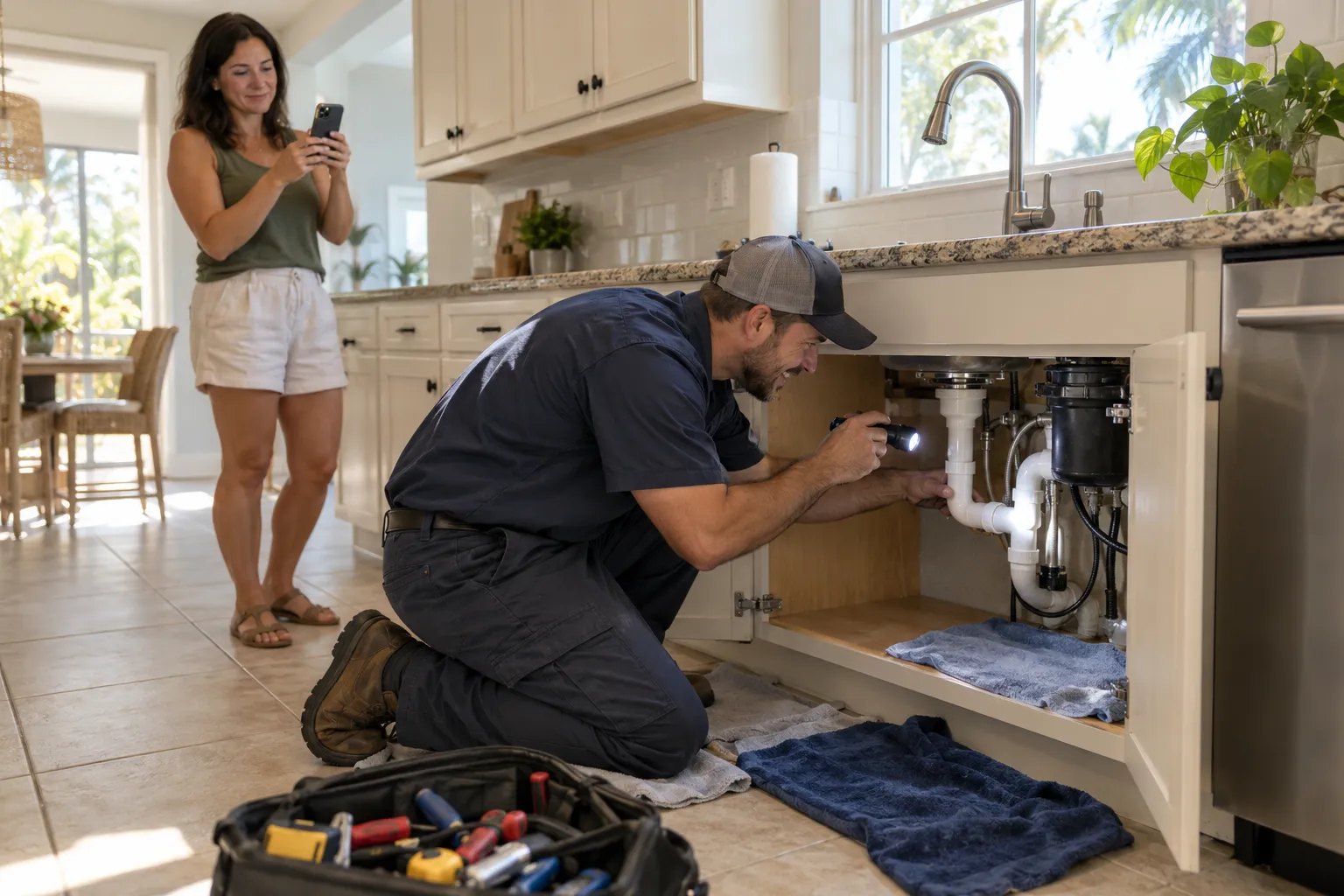
Emergency Plumbing Help for Plant City Homeowners
A plumbing emergency can make your mind race. Water spreads, floors get wet, and the next move feels unclear. Vietnamaware Plumbing is a referral service that helps homeowners in the Plant City area slow down and take that move. We connect you with independent local providers who handle urgent plumbing problems.
We also ask you to gather a few things first. Photos, short notes and receipts make estimates clearer. They help price talks stay fair. They can also make an insurance conversation easier later. Vietnamaware Plumbing does not do the plumbing work. The provider you speak with does, and you decide whether the estimate feels right. Breathe, then document, then get help.
Water Where It Should Not Be? Start Here
Take a slow breath. This is fixable, and you do not have to solve it all at once. You only need the next step.
The next step is to stop the water. Find your main shutoff valve and turn it clockwise until it stops. In many homes here, it sits near the water meter, by an outside wall, or in the garage. Knowing where it is before a problem starts is a gift to your future self.
If water is close to outlets, cords or the electrical panel, stay back. Only switch off power at the breaker if the floor around it is dry and you can reach it safely. When in doubt, step outside and ask a provider what to do.
What Counts as a Plumbing Emergency?
Not every drip needs a rush. But some problems should not wait for a convenient week. Treat it as urgent if you see any of these:
- A pipe that is spraying, bursting or leaking steadily
- Water coming up through a floor, or a warm, wet spot on a slab
- Sewage backing up in tubs, showers or floor drains
- A water heater that is leaking, hissing or making loud popping sounds
- No water at all, with signs of a break
- A smell of sewage that is getting stronger
A slow drip under a sink can usually wait for a normal visit. A running toilet can too. If you feel unsure, that is a fine reason to ask a provider.
Your First Ten Minutes
Keep the order simple. Shut off the water. Move rugs, boxes and electronics out of the wet area. Open a few cabinet doors to let air in. Turn off the water heater if it is the source, and leave gas or electric controls alone if you are not sure how they work.
Then pick up your phone. You will need it for the next part.
Photos Before Repairs
This is the habit that helps most later. Before anything is moved or mopped, take wide photos of the room. Then take close shots of the leak, the wet walls, the floor and any ruined items. A short video walking through the space works too.
Write quick notes: when you noticed the problem, what you saw, what you shut off, and the time. Keep receipts for towels, fans or a hotel if you need one.
These records help a provider see what happened. They help you compare estimates fairly. And they can help with a claim, since providers can often help document damage for an insurance conversation. Some policies may cover sudden damage, so check your own policy.
Why Acting Quickly Matters Where the Air Is Already Damp
In a humid climate, wet materials do not dry on their own. Drywall, baseboards and insulation hold moisture, and mold can start to grow. Our long, wet summers make that harder.
Storm season adds another layer. Heavy rain, power outages and shifting ground can all stress older lines. If you have a water problem during a storm, safety comes first. Wait until it passes before checking outside valves or standing water.
Many providers can respond quickly, but availability changes with the day and the weather. That is why it helps to reach out early.
Burst Pipes and the Odd Cold Snap
Freezing is rare in warm regions, which is exactly why a cold night can catch people off guard. Pipes in attics, outside walls and exposed spots can crack when they are not insulated.
Older pipes can also fail without any cold at all. Corroded lines, high water pressure and worn fittings sometimes give way. If a pipe has burst, shut off the main, open a faucet to relieve pressure, and take your photos.
If you think a pipe is frozen but not yet burst, do not use a flame. Ask a provider how to thaw it safely.
Slab Leaks and Hidden Water
Many homes in this area are concrete block on a slab, with few basements. That means some supply lines run under the floor. A leak there can hide for weeks.
Clues include a hot spot on the tile, a sound of running water when everything is off, a sudden jump in your water bill, or damp carpet edges. Check your meter. If it moves while every tap is off, tell the provider.
Water Heater Trouble
A leaking tank, a rusty puddle or a loud rumble deserves attention. Turn off the water supply to the heater, and shut off its power or fuel if you can do so safely. Take a photo of the model label. Providers often ask for it.
Some heaters can be repaired. Others are at the end of their life. A written quote that covers both choices helps you decide calmly.
Backups and Blocked Drains
When sewage rises in a tub or floor drain, stay out of the water and keep children and pets away. Stop using sinks, showers and toilets. Providers who offer emergency drain clearing and blocked pipe services can often find where the clog sits. If the cause is deeper in the main line, that is a different job, and sewer line repair has its own page on this site.
What a Provider Does When They Arrive
A good visit follows a pattern. The provider finds the source, checks the damage, explains the options and gives a price. Then the repair starts, if you agree.
Expect questions. How long has this been going on? Where is the shutoff? What did you notice first? Your notes make those answers easy.
Choosing a Provider You Feel Good About
Urgency can make people rush. Try to stay steady anyway. Ask whether the provider is licensed in your state, whether they carry insurance, and how they price the work. Ask if the quote is a fixed price or an hourly rate. Ask what could change it.
A provider who explains things clearly is a good sign. Pressure to sign right away is not. Remember that Vietnamaware Plumbing only makes the introduction. The agreement is between you and the provider.
Get It in Writing
Before work begins, ask for a written quote. It should list the scope, the parts, the labor and any extra fees. If the plan changes mid-job, ask for the change in writing too. This protects both sides.
After the Repair
Take another set of photos once the work is done. Keep the invoice, the quote and any warranty paperwork in one folder. Ask the provider what to watch for over the next few days, such as new stains or odd sounds.
If water got into walls or floors, drying matters. Ask whether fans or a moisture check make sense. Then send your records to your insurance company if you plan to file a claim.
What's Included
Urgent Leaks
Spraying pipes, steady leaks and water coming up through floors can be reviewed by local providers who handle urgent plumbing problems.
Water Heater Issues
Leaking tanks, strange noises and no hot water can be checked, then repaired or replaced.
Hidden Slab Leaks
Providers can look for leaks under floors when you see warm spots or a rising bill.
Sewage Backups and Clogs
Backed-up drains and blocked pipes can be cleared, and the cause traced to its source.
What Emergency Plumbing Costs
Prices depend on the problem, the parts, how hard the pipe is to reach and when the visit happens. These are typical U.S. ranges only. Your own cost will vary, so ask for a written quote.
| Service | Typical range | Notes |
|---|---|---|
| Emergency visit and diagnosis | $100 – $400 | Often applied toward the repair, so ask |
| Burst or leaking pipe repair | $200 – $1,500 | Depends on pipe type and wall access |
| Slab leak repair | $500 – $4,000 | Rerouting a line can cost more |
| Water heater repair | $150 – $700 | Parts and age change the price |
| Water heater replacement | $1,200 – $3,500 | Tank size and type matter |
| Emergency drain clearing | $150 – $600 | Deeper clogs may need a camera |
How It Works
Stop the Water
Turn off the main valve, and stay away from water near electrical outlets.
Photograph and Note
Take wide and close photos, then write down what you saw and when.
Reach a Provider
Request a callback to check provider availability, or send the request form.
Review the Written Quote
Read the scope and price, ask questions, then approve the work you feel comfortable with.
Why Call Vietnamaware Plumbing
Clear Steps
You get a simple order of actions, so a stressful moment feels less like a puzzle.
Paperwork Ready
Photos, notes and receipts make estimates clearer and help keep price talks fair.
Local Providers
Independent providers in our network know the homes and weather in the Plant City area.
Honest Role
Vietnamaware Plumbing makes the introduction. The provider does the work and gives the quote.
Other Services
Need emergency plumbing in Plant City?
Burst pipe, backed-up drain or sewer smell? Request a callback to check provider availability, or send a request and ask for an estimate. There is no obligation.
No obligationEmergency Plumbing FAQ
What should I do first when a pipe bursts?
Turn off the main water valve right away, then open a faucet to release pressure. Keep away from water near outlets. Take photos before cleanup, write a few notes, and contact a local provider to look at the damage.
Does homeowners insurance cover a burst pipe?
Some policies may cover sudden damage, but not slow leaks or worn parts. Check your policy and ask your insurer. Providers can often help document damage, and your photos and receipts help.
How much does an emergency plumber cost?
Most jobs fall between about $150 and $1,500, and bigger repairs cost more. Cost depends on the problem and the access. Ask for a written quote before work starts.
Reach a local provider
Burst pipe, backed-up drain or sewer smell? Request a callback to check provider availability, or send a request and ask for an estimate. There is no obligation.
No obligation